Is 'AI Hallucination' Unavoidable? How RAG Builds Business Trust
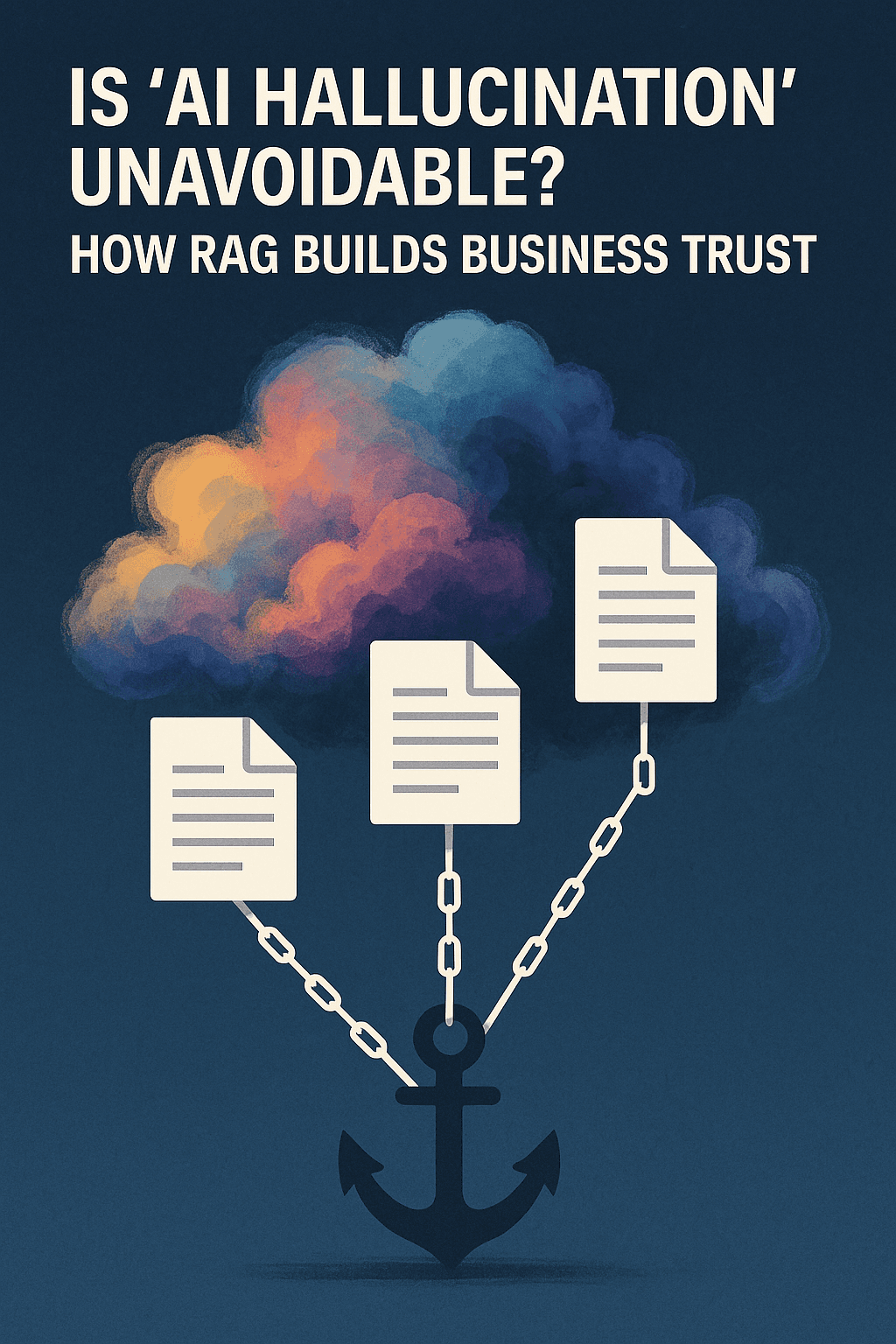
You've likely heard the stories: Large Language Models (LLMs) like ChatGPT confidently stating incorrect facts, inventing sources, or going completely off-topic. This phenomenon, often called "AI hallucination," is a major concern for businesses looking to leverage AI for critical tasks. If you can't trust the AI's output, how can you rely on it?
While no complex system is perfect, the narrative that hallucinations are simply an unavoidable curse of LLMs isn't entirely accurate, especially when applied correctly in a business context. At Fanktank, we build AI solutions designed for reliability, and a key technique we employ is **Retrieval-Augmented Generation (RAG)**.
What Causes AI Hallucinations?
LLMs are incredibly sophisticated pattern-matching machines trained on vast amounts of text data. They excel at generating fluent, human-like text based on the patterns they've learned. However:
- **They Don't "Know" Facts:** They predict the next most likely word based on their training data, not necessarily based on factual correctness in the real world. ([IBM, 2024](https://www.ibm.com/think/topics/ai-hallucinations))
- **Outdated Knowledge:** Their training data has a cut-off point. They aren't aware of events or information created after that date unless specifically updated or given new context.
- **Ambiguous Prompts:** Vague or unclear questions can lead the model down statistically likely but factually incorrect paths. ([Lakera, 2024](https://www.lakera.ai/blog/guide-to-hallucinations-in-large-language-models))
- **Reinforcement Learning Quirks:** The process used to make models helpful and harmless can sometimes inadvertently encourage plausible-sounding but untrue statements.
For general creative tasks, occasional inaccuracies might be acceptable. For business applications – customer support, internal knowledge access, data analysis – they are often deal-breakers.
Enter RAG: Grounding AI in Your Reality
RAG fundamentally changes how an LLM generates answers by forcing it to rely on specific, verified information *provided at the time of the query*. Instead of solely using its vast (but potentially flawed or outdated) internal training data, the process works like this:
- **Retrieve:** When a question is asked, the RAG system searches *your* designated, up-to-date knowledge base (company documents, product manuals, databases) for relevant information snippets.
- **Augment:** These retrieved snippets ("context") are added to the prompt given to the LLM.
- **Generate (Grounded):** The LLM is explicitly instructed: *"Answer the user's question based ONLY on the provided context."* ([AWS, 2024](https://aws.amazon.com/what-is/retrieval-augmented-generation/))
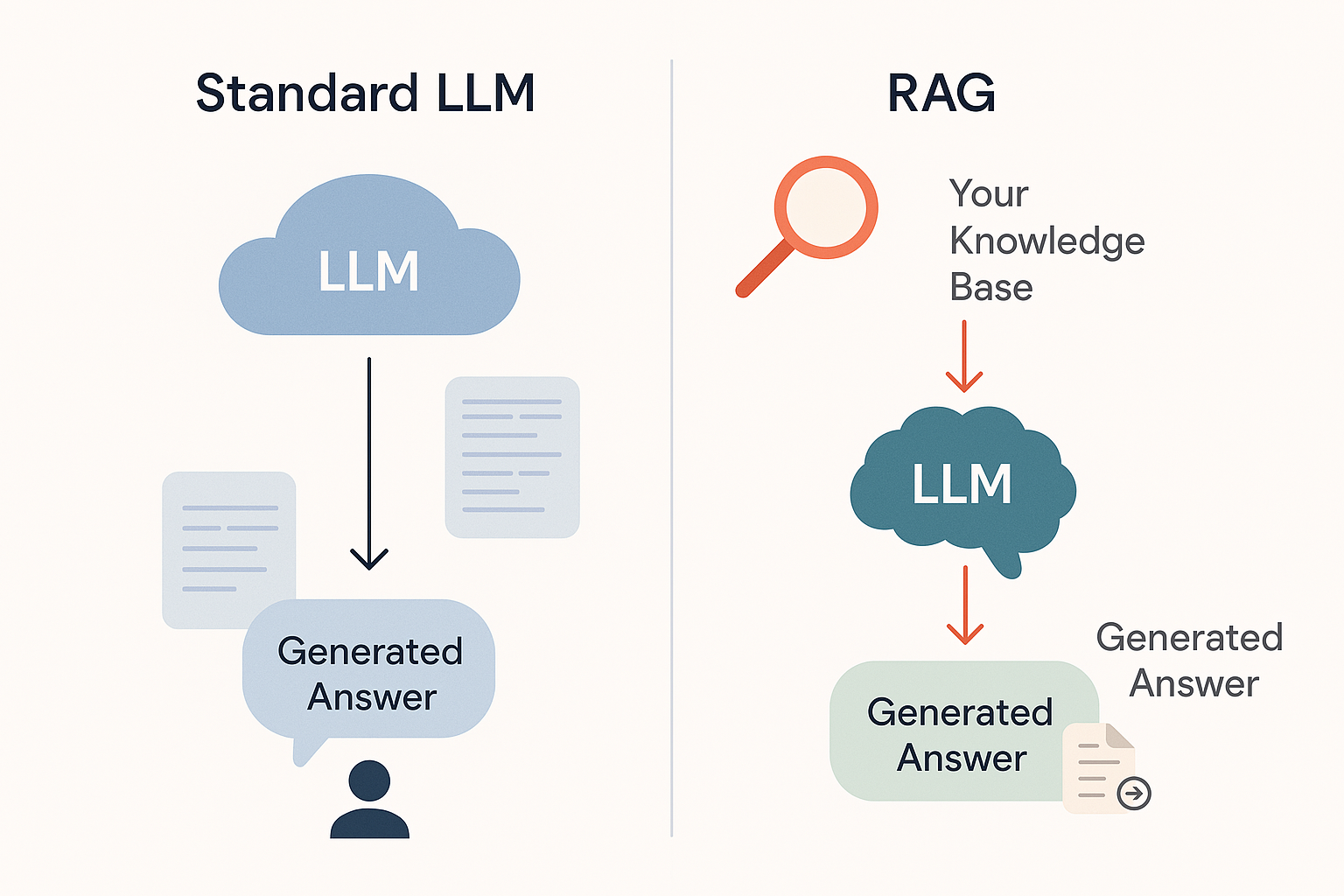
This "grounding" mechanism dramatically reduces hallucinations because:
- **Answers Originate from Your Data:** The LLM isn't guessing; it's synthesizing information from sources *you* control and trust. ([Moveworks, 2024](https://www.moveworks.com/us/en/resources/ai-terms-glossary/retrieval-augmented-generation))
- **Knowledge is Current:** The RAG system references your latest documents, not old training data.
- **Verifiability:** Good RAG systems provide citations, linking answers back to the specific source documents, allowing users to verify the information. ([SemiEngineering, 2024](https://semiengineering.com/rag-enabled-ai-stops-hallucinations-adds-sources/))
Is RAG Foolproof?
While RAG significantly improves reliability, some nuances remain:
- **Retrieval Quality:** The system must retrieve the *correct* context. Poor retrieval can still lead to inaccurate answers, even if they are based *on the retrieved context*. This requires careful indexing and search strategies.
- **Context Integration:** The LLM must accurately synthesize information from potentially multiple retrieved snippets without misinterpretation.
- **Source Quality:** The accuracy of the RAG system ultimately depends on the accuracy and quality of the underlying documents in your knowledge base. (Garbage in, garbage out still applies). ([Stanford HAI, 2024](https://hai.stanford.edu/news/ai-trial-legal-models-hallucinate-1-out-6-queries))
Building Trustworthy AI with Fanktank
At Fanktank, designing effective RAG systems is a core competency. We focus on:
- Optimizing the retrieval process to find the most relevant information.
- Crafting precise prompts for the LLM to ensure grounded generation.
- Implementing robust evaluation methods to measure accuracy and relevance.
- Ensuring the underlying knowledge base is well-structured and maintained.
Learn more about our approach in our [Smart Knowledge Systems service](/services/knowledge-systems).
Conclusion: From Unreliable Guesses to Trusted Assistant
AI hallucinations are a valid concern, but they are not an insurmountable barrier for business adoption. By implementing techniques like RAG, we can ground powerful LLMs in factual, company-specific data, transforming them from potentially unreliable oracles into trustworthy, knowledgeable assistants.
**Ready to build an AI assistant your team and customers can rely on? Let's discuss how RAG can provide grounded, accurate answers from your own data.**
[Explore Smart Knowledge Systems](/services/knowledge-systems) or [Book a Consultation](/contact)
References
- [IBM, 2024] ["What Are AI Hallucinations?"](https://www.ibm.com/think/topics/ai-hallucinations), IBM. *(Explains the causes of AI hallucinations, including overfitting and training data inaccuracies.)*
- [Lakera, 2024] ["Guide to Hallucinations in Large Language Models"](https://www.lakera.ai/blog/guide-to-hallucinations-in-large-language-models), Lakera. *(Breaks down sources of hallucinations and how to test models for robustness.)*
- [AWS, 2024] ["What is RAG? - Retrieval-Augmented Generation AI Explained"](https://aws.amazon.com/what-is/retrieval-augmented-generation/), AWS. *(Describes how RAG optimizes LLM outputs by referencing authoritative external knowledge bases.)*
- [Moveworks, 2024] ["What is Retrieval Augmented Generation (RAG)?"](https://www.moveworks.com/us/en/resources/ai-terms-glossary/retrieval-augmented-generation), Moveworks. *(Highlights how RAG grounds AI outputs in factual data, reducing misinformation risks.)*
- [SemiEngineering, 2024] ["RAG-Enabled AI Stops Hallucinations, Adds Sources"](https://semiengineering.com/rag-enabled-ai-stops-hallucinations-adds-sources/), SemiEngineering. *(Discusses how RAG models enhance answer precision by chunking data and providing source citations.)*
- [Stanford HAI, 2024] ["AI on Trial: Legal Models Hallucinate in 1 out of 6 (or More) Queries"](https://hai.stanford.edu/news/ai-trial-legal-models-hallucinate-1-out-6-queries), Stanford HAI. *(Published June 4, 2024; discusses the prevalence of hallucinations in AI legal research tools.)*